
Stratford past resident records
The backward trail has more than one clock. SearchIQS starts with a modern digital land index, the library holds dated people and address sources, and the census gives household snapshots. The current Vision card is a starting point, not a historical occupant list. Use the table to choose a record that fits the era you are testing.
| Source | Years it covers | Where held | What it shows |
|---|---|---|---|
| SearchIQS land records | 6/19/1964-present | Town Clerk index and images; older books at Clerk | Grantor, grantee, document, date, book/page, instrument |
| SearchIQS maps | 3/17/1859-present | Town Clerk / Engineering | Lots, subdivisions, roads, legal map relationships |
| Vision property database | 2025 Grand List; values as of 10/1/2025 | Stratford Assessor / Vision | Current owner, situs, mailing destination, value fields |
| Library directories and telephone volumes | Exact local run not posted; LOC Bridgeport division includes Stratford | Stratford Library / LOC | Dated name, address, subscriber, and household clues |
| Newspapers | 1873-present stated; NewsBank Stratford Star 2000-2018 | Library, microfilm, clipping file, NewsBank | Obituaries, family, civic, property, and event dates |
| Federal census | 1790-1950 schedules under release rules | National Archives, 1950 Census, library databases | Household names and census geography |
| Probate and permits | Probate lookup generally 1/5/2011; permit dates not verified | Probate District 47, departments, FOI | Estate, fiduciary, construction, or land-use events |
The SearchIQS land cutoff is an online-index date, not the beginning of a Stratford parcel. For 1859 through 1963, the physical Town Clerk books, maps, library, State Library, Historical Society, and Town Historian are the fallback chain.
Freeze Stratford address records
Before searching previous residents, write the current street number and name, the ZIP, the Vision PID or MBLU, and any legal description or book and page. Add the date of the record. The physical address can change, but the parcel key or map relationship may bridge the change.
Use USPS to check the postal format, CT Metro GIS to see the parcel polygon, and Vision to save owner, situs, mailing destination, sale fields, and parcel identifiers. If a condominium, rear lot, water edge, industrial tract, or multi-frontage parcel appears, keep the unit or legal lot separate. One street number can hide several record paths.
Never replace the current owner with a historical occupant. “Owner,” “subscriber,” “household member,” “applicant,” and “decedent” are different labels. The purpose of a previous residents search is to preserve those distinctions while following one physical place backward.
Trace Stratford ownership records
Vision's Stratford search accepts Address, Owner, Acct#, MBLU, PID, and All. Address mode gives the current parcel card. Owner mode can test a name. PID or MBLU is useful when an old street number is uncertain. The 2025 Grand List and October 1, 2025 value date are the current assessment anchor in the research.
Save the current owner-of-record, co-owner, situs, mailing address, PID, MBLU, sale price if displayed, sale date, book and page, instrument, ownership history, land and building fields, and valuation history. The parcel-card schema is a field inventory, not a claim that every field is populated on every Stratford parcel. Confirm sale data in SearchIQS.
A tax-mailing destination can be outside Stratford and does not prove occupancy. The present owner is the first link in the title chain, not necessarily the last previous resident. When a name is the actual goal rather than a house history, use the Stratford resident lookup page to compare independent record roles.
Trace Stratford deed records
Search the current owner as grantee around the Vision sale date. Open the deed or index row if available, then note grantor, grantee, recording date, document group and description, book and page, instrument number, case number, image indicator, consideration if shown, and legal description. A grantor conveys an interest. A grantee receives it. A chain of title is the linked sequence of those transfers.
- Use the Vision owner, PID, MBLU, and sale book or page as the starting keys.
- Search SearchIQS by party and date, then compare the legal description to the parcel.
- Record the seller as the next historical grantee and repeat the search backward.
- Switch to book/page, instrument, map, or name variants when a street number fails.
- When the online trail reaches June 19, 1964, ask the Town Clerk for physical books, images, or certified copies.
The current Stratford guest form and a local deed row were not captured because of a Cloudflare challenge. The generic SearchIQS field protocol is not a local deed example. Confirm a first local result at the Clerk counter or in a normal browser.
- Chain of title
- The linked record of interests transferred from one owner to the next.
- Legal description
- Lot, map, block, unit, or boundary words that identify land apart from a street number.
- Instrument
- A recorded document, such as a deed, mortgage, lien, release, or map filing.
- Book and page
- A location or citation for a recorded document in the land-record system.
Use Stratford map records
SearchIQS maps reach March 17, 1859, earlier than the current online land index. A map can show a subdivision, lot line, road, or legal relationship that explains why a later deed uses a different lot or number. Engineering also holds subdivision, sewer, drainage, road, sidewalk, curb, and map records, with copy charges listed as $5 per large sheet or $0.50 for letter size.
Overlay an old map or page with the CT Metro parcel viewer only after preserving the original citation. Record the road spelling, lot label, adjoining owner, water edge, and map reference. A map is not a resident list. It is a bridge between the physical place and a legal description.
No verified Stratford street-renumbering schedule, renaming year, or annexation crosswalk was found. If the old and current numbers disagree, compare MBLU or PID, subdivision map, adjacent parcels, old directory spelling, and Planning and Zoning documents. Ask the Town Clerk, Assessor, Engineering, or State Library rather than guessing.
Date Stratford property records
Planning and Zoning posts Applications, Notices, Agendas, and Minutes by board, commission, year, and month. Materials are commonly posted at least seven days before a meeting. Packets can name an owner, applicant, representative, parcel, street, and land-use event. Building Official records cover construction, additions, renovations, demolition, signs, trade work, inspections, and certificates of occupancy.
ViewPoint Cloud is Stratford's online permit application route, but public access to completed owner or address searches was not confirmed. Engineering is the fallback for map and infrastructure records. If a date-bounded permit index is not posted, ask the department or submit a focused FOI request with the address, parcel key, date range, and document type.
A permit applicant or contractor is not necessarily an owner, occupant, or prior resident. Use the event to date a change in the building or parcel, then return to the deed, directory, obituary, or census layer for people.
Stratford Planning and Zoning documents and the Engineering Division are the official routes for the land-use and map side of a house history. The State Library History and Genealogy guide is the source shown in the old-house research capture below.
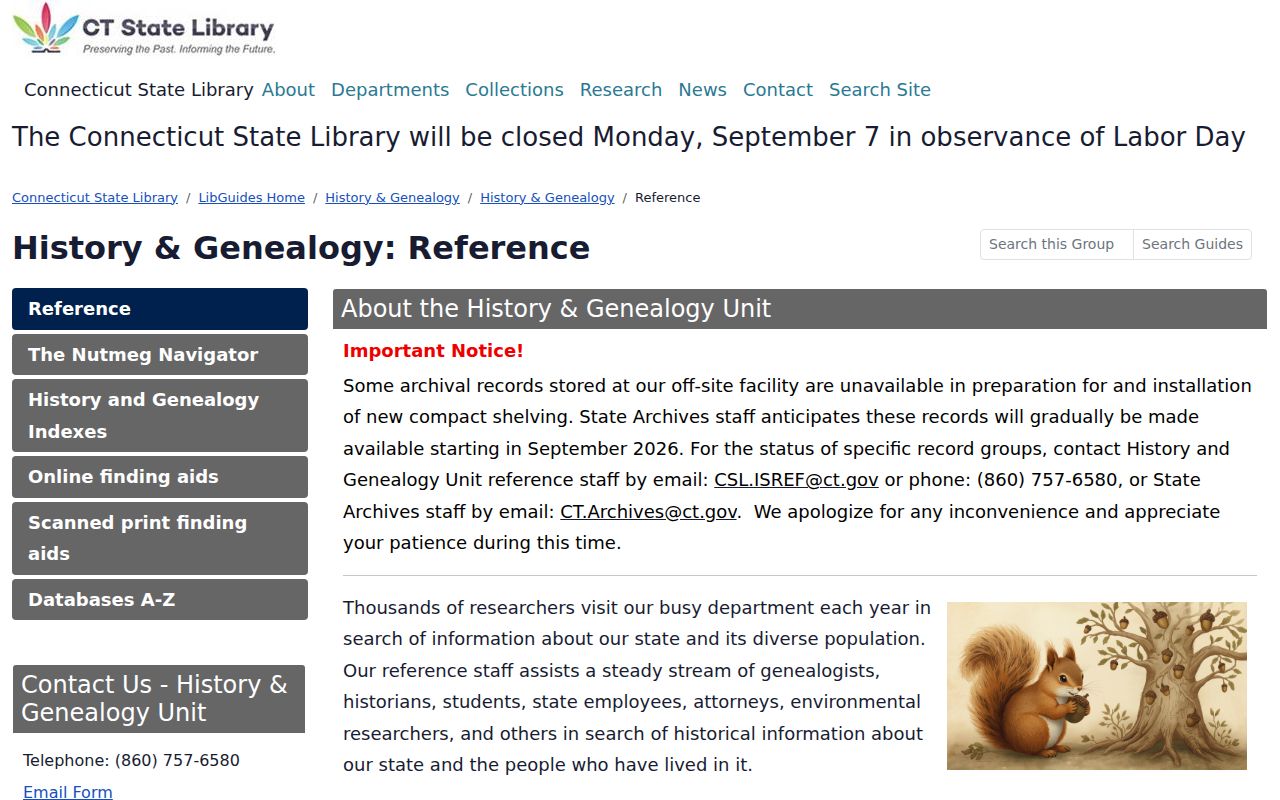
The State Library old-house route is a statewide research aid. It can guide a Stratford parcel search, but a local house-specific guide or fee schedule was not located.
Pair the deed chain with Stratford directories
Ownership is only half of a previous residents search. Stratford Library holds city directories, yearbooks, newspapers, clipping files, and town reports. The Library of Congress Bridgeport telephone division includes Stratford. Ask for surname order and reverse or criss-cross order, then save the exact year, page, street spelling, telephone or exchange, and printed household notation.
The local library confirms directory holdings but does not post a complete publisher-and-year run. Do not invent a Polk title, first year, last year, or missing-volume explanation. If the requested year is not held, record “not held” and try the LOC, State Library, Historical Society, newspapers, census, or town reports.
A directory occupant can be a subscriber, non-owner household member, boarder, business user, or owner. Compare the page with the deed and map, not instead of them. The Stratford city directory collections page explains how to read those entries and pair them with census years.
Read Stratford newspaper records
Stratford Library's official description gives newspapers from 1873 to the present and lists a Stratford Star NewsBank archive from 2000-2018. Search an old surname with the street, church, school, neighborhood, or property phrase. An obituary can name relatives, a former address, death date, funeral home, executor, or civic group. A property or meeting notice can tie a person to a parcel at a particular moment.
Keep the article title, publication, date, page or database record, and exact printed name. A notice can contain a spelling error, a former address, or a role that is not residence. Confirm it with the directory, census, deed, or probate route.
For a person who died after leaving the address, probate can supply a fiduciary or estate trail. For an older death, ask the library, Town Historian, Historical Society, State Library, cemetery, or church source. A dedicated public Stratford cemetery name index was not located.
Close Stratford probate records
Probate District 47 at 468 Birdseye Street handles estates, trusts, guardianships, conservatorships, adoptions, and name changes connected to Stratford. The statewide lookup searches Decedent's Estates and Trusts by district, status, first name, and last name. Results show case number, name, middle initial, type, and district, and a case number may lead to fiduciary contact details.
The online lookup generally begins January 5, 2011, while older material may require the district court, State Library, or local historical collection. Ask the clerk what a nonconfidential interested person can inspect or copy. Do not publish a private heir address or treat a fiduciary's contact information as a current residence.
Probate is an endpoint for a house history because an obituary and estate can explain why ownership changed. It is not a replacement for the deed chain, and a case index does not guarantee every document is public. If a federal estate, bankruptcy, or civil filing is part of the trail, PACER is the federal access route; review the current PACER fee rules before opening documents.
Use Stratford ownership records
Connecticut's CTBigList is a free State Treasurer name search for unclaimed assets. The official unclaimed-property overview says property can include bank accounts, checks, refunds, securities, insurance proceeds, and similar holdings turned over after a dormancy period generally described as three to five years. The owner or legal heir must prove the claim.
This can help a family-history search when a known previous resident or heir already has an ownership connection. It is not a current address finder. The static capture did not expose the exact search fields or result columns, so use the live official site and preserve the claim instructions without inventing a field list.
Open CTBigList directly and verify that any outreach comes from the State Treasurer. Do not pay an unsolicited claimant or send identity documents to a message that merely quotes a public name.
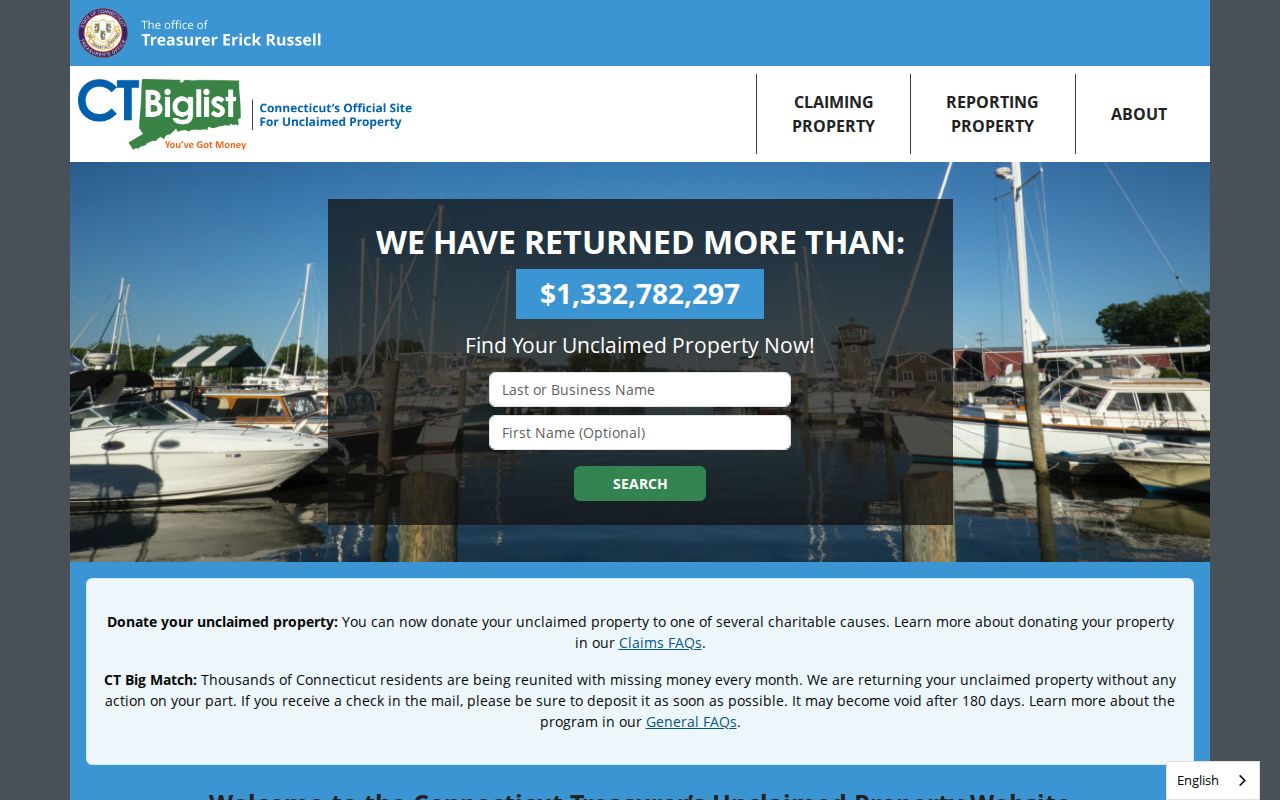
The capture shows the official State Treasurer route as a name-and-claim resource, not as a parcel or household directory.
Check Stratford house records
Sanborn fire-insurance maps can show building footprints, outbuildings, lot lines, street numbers, industrial uses, and hydrants. Use the Library of Congress Sanborn collection and ask Stratford Library or the State Library for local sheets. A verified Stratford-specific Sanborn year list was not found in the official pages inspected, so do not state that a particular year exists until a catalog or librarian confirms it.
The Connecticut State Library Old House Research guide, Historical Society, and Town Historian are the right referral chain for an older structure. The Stratford Historical Society's Judson House, Mitchell Museum, Carriage House, and Omeka collections can add images and local context. Preserve collection title, item number, date estimate, and rights note.
A map or photograph can explain how an address looked. It cannot prove which family slept there. Pair the image with a directory, census, deed, newspaper, probate, or cemetery record.
Pair Stratford resident records
The household layer belongs beside, not inside, the title layer. Start with the directory year nearest the deed or map event. Search surname order, then address order. Pair a directory year with the nearest federal census, keeping in mind that census geography and current parcel lines may differ. Search newspapers for the missing years.
- Write the address, parcel key, legal description, and target year.
- Find the closest directory, telephone, or reverse volume and copy the page citation.
- Compare the same address with the census, newspaper, school, church, or obituary source.
- Use the deed chain to explain owners and the directory to explain listed occupants.
- Mark gaps, spelling changes, and unverified address bridges instead of filling them with a guess.
For previous residents of a Stratford address, the strongest result is a dated chain with different sources agreeing on place and person. A single old directory line is still useful, but it should remain an historical clue until another record supports it.
House-history use only. Deeds, directories, newspapers, and probate records are appropriate for family history, property history, and lawful personal research. Connecticut's anti-stalking and harassment chapter supplies the criminal-law context. Do not use a previous residents search to stalk, harass, intimidate, or harm a living person.
Bridge Stratford address records
When a former number does not match the current map, preserve both spellings. Search the old directory page, USPS format, Vision PID or MBLU, SearchIQS legal description, subdivision map, adjacent parcels, and Planning and Zoning application. Ask the Town Clerk, Assessor, Engineering, or State Library for an ordinance or crosswalk if one exists.
No official Stratford renumbering year or crosswalk was located. The correct statement is therefore “address continuity not verified,” followed by the sources already checked. A missing online result may reflect paper coverage, an old street name, a protected record, or a missing directory year.
This is where a careful previous residents search ends: with a documented trail, a named gap, and an obvious next custodian. The current street chain belongs on the Stratford street directory page. Historical collections remain on the city directory page.